
 EN
EN
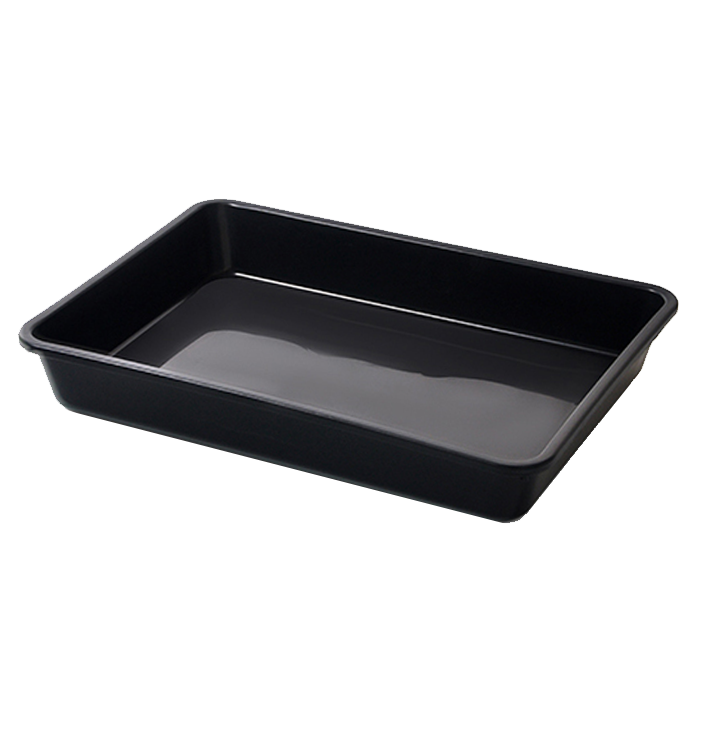
Design Principles That Make Pork Trays Easy to Clean
Food-Grade Materials and Seamless, Non-Porous Construction
Pork trays made from FDA-compliant polymers resist bacterial adhesion thanks to their non-porous surfaces—eliminating microscopic niches where pathogens like Salmonella can persist. Rotational molding and other seamless fabrication techniques remove joints and seams entirely, cutting residual organic matter by 89% compared to segmented designs (Food Safety Journal, 2023). This monolithic construction also maintains structural integrity during repeated high-temperature sanitation cycles without compromising chemical resistance.
Optimized Geometry for Drainage, Minimal Crevices, and Tool-Free Disassembly
A base inclined at 3°–5° and corners with ≥5mm radii ensure complete fluid drainage within 8 seconds after rinsing—while radius-edge geometry reduces biofilm-prone zones by 97%. Tool-free snap-fit disassembly allows full separation into flat, inspectable components, slashing cleaning time by 34% versus fixed-tray systems. These design choices directly mitigate the top contamination risks identified in FSIS 2023 workflow analyses for protein handling environments.
Effective Sanitation Protocols for Pork Trays
Validated Cleaning Methods Against Salmonella and Listeria on Pork Tray Surfaces
Targeted, pathogen-specific sanitation is essential: quaternary ammonium compounds (QACs) deliver 99.8% reduction of Salmonella enterica and Listeria monocytogenes on non-porous tray surfaces when applied for ≥5 minutes post-cleaning. For any tray with micro-porosity—or when biofilm risk is elevated—peracetic acid blends offer superior penetration, eliminating 99.4% of embedded Listeria. All validated protocols must define minimum contact time, mechanical action (e.g., scrub pressure), and rinse volume—typically 1.5 gallons per minute per tray station. ATP swab testing provides immediate verification; a reading below 10 RLU confirms sanitary readiness.
Balancing Time, Temperature, and Detergent Concentration in Manual and CIP Cycles
Sanitization efficacy depends on precise coordination of three interdependent parameters:
| Parameter | Manual Washing Range | CIP (Clean-in-Place) Range | Critical Impact |
|---|---|---|---|
| Temperature | 110–120°F | 135–160°F | Protein denaturation |
| Contact Time | 2–5 minutes | 8–15 minutes | Pathogen lethality |
| Detergent Concentration | 0.5–1.5% | 1–3% | Residue dissolution |
Start manual cleaning with cool water (<80°F) to prevent protein coagulation on surfaces. Alkaline detergents (pH >11) at 130°F efficiently dissolve fats, while acidic rinses neutralize mineral deposits. In CIP systems, turbulent flow (Reynolds number >20,000) ensures full coverage—even over contoured tray surfaces. Exceeding thermal limits accelerates polymer degradation; insufficient dwell time permits pathogen regrowth within as little as 6 hours.
Integrating Pork Tray Sanitation into Daily SSOPs and Workflow
Pre-Use Inspection, Post-Use Rinse, and Trigger-Based Deep Cleaning Schedules
Robust sanitation begins with integration into daily SSOPs (Sanitation Standard Operating Procedures). Conduct pre-use inspections to verify surface cleanliness and physical integrity before raw pork contact. Follow each production run with an immediate post-use rinse, removing organic residues before they dry and adhere. Most critically, move beyond fixed schedules: adopt trigger-based deep cleaning activated by production volume changes, positive environmental pathogen test results, or scheduled maintenance events. The USDA mandates documented SSOPs for meat processors—including records of cleaning validation—ensuring traceability and accountability while transforming reactive cleaning into proactive food safety assurance.
Emerging Innovations Enhancing Pork Tray Hygiene Assurance
IoT-Enabled Residue Sensors and Digital Cleaning Compliance Tracking
IoT-enabled residue sensors embedded in tray systems detect trace proteins and fats invisible to the naked eye—triggering real-time alerts when thresholds are exceeded. Paired with cloud-based compliance platforms, these systems auto-log critical sanitation parameters—including detergent concentration, water temperature, and contact time—during both manual and CIP processes. The result is an audit-ready digital trail that eliminates paper-based documentation errors. Facilities using this integrated approach report 30% faster sanitation cycles (Food Safety Tech, 2023) and a closed-loop verification process: sensor data validates cleaning effectiveness and informs ongoing protocol refinement.
Frequently Asked Questions
What materials are recommended for making pork trays easy to clean?
Pork trays made from FDA-compliant polymers are ideal due to their resistance to bacterial adhesion and non-porous nature, which prevents pathogens from persisting.
How can design enhancements reduce the cleaning time for pork trays?
Design enhancements like tool-free snap-fit disassembly and optimized geometry for drainage can significantly reduce cleaning time by allowing easier access and full separation into flat components.
What are the effective sanitation protocols for pork trays?
Effective protocols include using quaternary ammonium compounds for non-porous surfaces and peracetic acid blends for enhanced penetration when biofilm risk is present. Detailed protocols ensure proper contact time, mechanical action, and rinse volume.
How do IoT-enabled residue sensors enhance hygiene assurance?
These sensors detect trace residues invisible to the naked eye and provide real-time alerts when thresholds are exceeded, ensuring that cleaning processes are effective and compliant with sanitation standards.