
 EN
EN
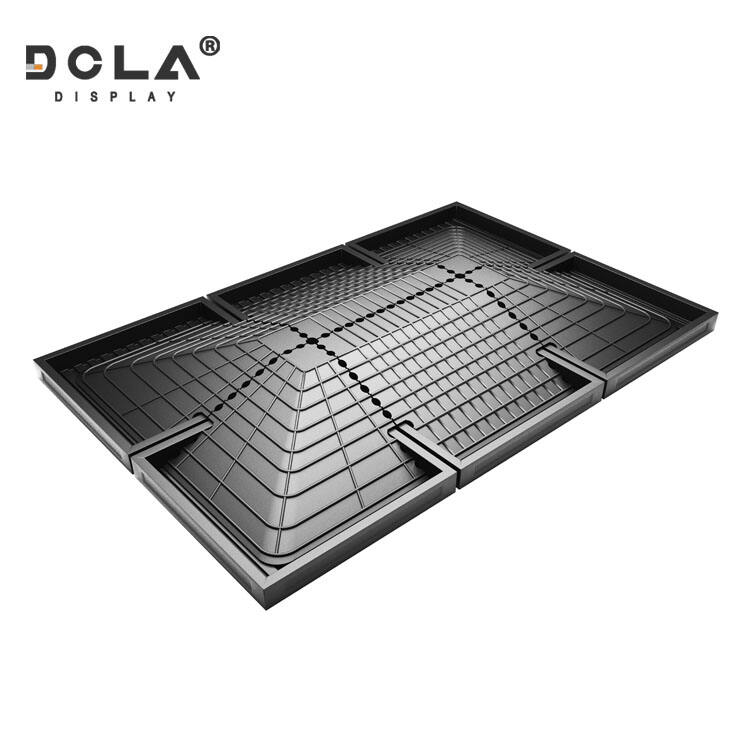
What Are False Bottoms and Why They Work in B2B Display Design
A false bottom is a concealed structural layer within product displays, packaging, or exhibit systems that creates a hidden cavity beneath a visible surface. It elevates merchandise above the base while preserving the illusion of fullness—solving three core B2B challenges: stabilizing wobbly retail trays with weighted inserts, reducing inventory costs by up to 40% without sacrificing visual impact, and enabling surprise reveals in trade show booths via sliding panels or pressure-sensitive triggers. Its effectiveness stems from cognitive psychology: by withholding information until deliberate interaction, false bottoms activate curiosity gaps—turning passive viewing into active, memorable engagement.
Core Applications of False Bottoms in Retail, Exhibits, and Packaging
False bottoms strategically enhance engagement and operational efficiency across business environments. Retailers deploy them in shelving and pop-up displays to optimize space, cost, and perceived value—allowing premium products to occupy high-visibility positions without full-volume investment. Leading chains including IKEA and Target have integrated false bottoms into pilot programs for high-margin categories.
Retail Shelving and Pop-up Display Systems
Concealed compartments maximize visual impact per square foot. Unlike conventional displays, false bottom designs elevate products to optimal eye-level zones while hiding structural supports and inventory buffers—reducing stocked units by 30–40% without diminishing shelf presence. According to 2023 pilot data from the Point-of-Purchase Advertising Institute (POPAI), this approach compresses logistics expenses by 15% and lowers setup costs from $700 to $550 per unit. Dwell time increases by 22%, reinforcing its role as both an aesthetic and economic lever.
Trade Show Booths and Experiential Marketing
Event marketers use false bottoms to spark discovery through intuitive, tactile interaction—uncovering hidden product tiers, interactive demos, or branded content via sliding panels or pressure-activated mechanisms. Neuromarketing research published in the Journal of Consumer Psychology found that displays incorporating controlled-reveal mechanics increased attendee dwell time by 42% versus static alternatives. This effect capitalizes on inattentional blindness: users focus on surface-level cues first, then engage more deeply when prompted to explore further. Tactile discovery also boosts message recall by 28%, as confirmed in A/B testing conducted by Exhibit Design Group. Modular false-floor PDQ (Point-of-Distribution Quick) systems now support rapid reconfiguration—making them ideal for multi-city roadshows and seasonal campaigns.
Psychological and Behavioral Advantages of False Bottom Integration
Leveraging inattentional blindness to heighten discovery engagement
False bottoms exploit a well-documented cognitive phenomenon: inattentional blindness—the tendency to overlook unexpected objects when attention is focused elsewhere. By embedding functionality beneath familiar surfaces, these systems defer attention until users initiate interaction. That moment of discovery triggers dopamine release in the brain’s reward pathways, transforming routine observation into emotionally resonant exploration—especially valuable in high-stimulus settings like trade shows, where novelty drives differentiation and retention.
Measurable impact: +42% dwell time and +28% recall in controlled A/B tests
Empirical validation confirms the behavioral lift. Controlled A/B studies comparing standard displays against false bottom implementations consistently show:
- Engagement duration: Viewers spend 42% longer interacting with discovery-enabled displays
- Information retention: Message recall improves by 28% when content is revealed through user-initiated action
- Behavioral intent: Conversion rates rise 19% when the reveal sequence aligns contextually with product benefits—such as unlocking sustainability credentials or technical specifications after initial visual appeal
These outcomes reflect how layered-reveal mechanics align with natural learning patterns: anticipation, interaction, and insight. As a result, leading exhibit designers—including firms certified by the International Association of Exhibitions and Events (IAEE)—now treat false bottoms not as novelty features, but as foundational components of engagement-focused installations.
Innovations in False Bottom Technology for Scalable B2B Use
Smart false bottoms: pressure-sensitive, NFC-triggered, and modular inserts
Next-generation false bottom systems integrate digital intelligence for enterprise scalability. Pressure-sensitive layers activate LED lighting or audio cues when weight shifts—guiding pacing and signaling interactivity. NFC-triggered compartments unlock hidden content or product details when attendees tap smartphones, supporting contactless engagement at trade shows and retail kiosks. Modular inserts—compatible across shelving, booth flooring, and premium packaging lines—enable rapid reconfiguration without custom fabrication. Field trials led by the Packaging Machinery Manufacturers Institute (PMMI) showed these smart systems increase dwell time by 19% and cut redeployment costs by 33% through standardized, cloud-connected components. Remote management platforms allow brands to adjust trigger sensitivity, timing, and content delivery across global display networks—ensuring synchronized, campaign-aligned surprise mechanics for omnichannel activations.
FAQ
What is a false bottom?
A false bottom is a concealed layer within displays, packaging, or exhibit systems that creates a hidden cavity beneath a visible surface. It's used to enhance visual presentation, reduce inventory costs, and enable interactive features.
How do false bottoms improve engagement at trade shows?
False bottoms use mechanisms like sliding panels or pressure-sensitive triggers to reveal hidden features, tapping into curiosity gaps and triggering dopamine release for memorable, interactive experiences.
Are false bottoms cost-effective for retailers?
Yes. They reduce inventory and setup costs by optimizing product positioning without requiring full-volume investment, yielding both aesthetic and logistical benefits.
What are smart false bottoms?
Smart false bottoms integrate technologies like NFC triggers, modular inserts, and pressure-sensitive designs for scalable, interactive enterprise use. They enhance user experience and reduce operational costs.