
 EN
EN
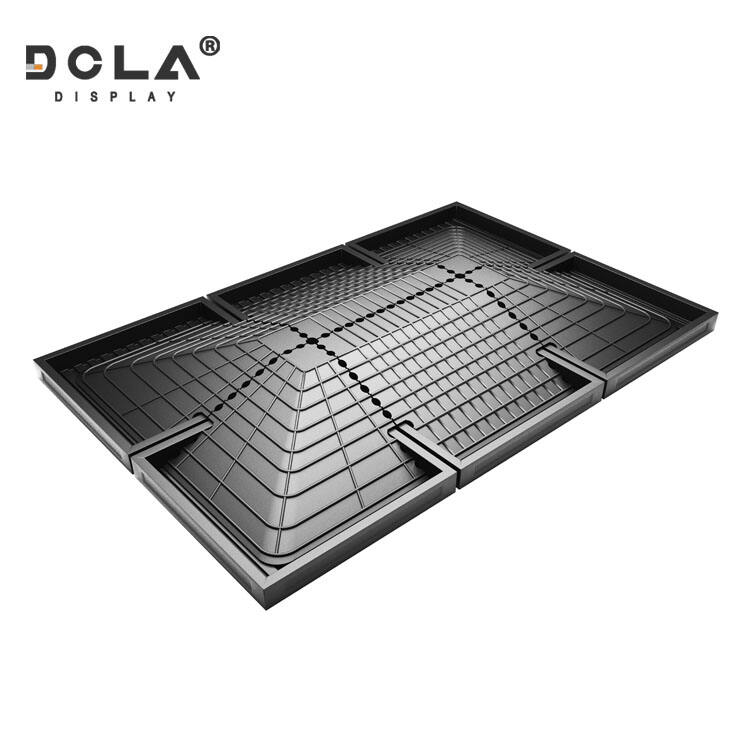
Understanding the visual illusion of false bottoms in high-end retail
Retail stores often use false bottoms to trick customers' eyes with depth illusions created through raised platforms, slanted mirrors, or layered display setups. What happens here is pretty fascinating from a brain perspective these installations actually mess with how we see things. According to research published in Vision Science Journal back in 2023, most people need about 2.3 seconds to switch their attention between what's real and what's not on those displays. When retailers squeeze down the vertical space in this way, products become much more noticeable without taking up extra floor area. It's like magic for marketers who want their goods to stand out while keeping costs under control.
How false bottoms redefine spatial perception in luxury retail displays
Staggered platforms can make those standard 8 foot ceilings feel like something out of a cathedral. When retailers place a handbag right at the center of an elevated display shelf, it grabs attention about 70% more than stuff sitting on regular floor displays according to some eye tracking research. The whole setup works wonders for showcasing premium products without losing that cozy boutique feel many shoppers crave. About two thirds of people shopping for luxury goods actually link the way space feels exclusive to how prestigious they think the brand is, so getting this balance right matters a lot in store design.
Consumer psychology behind deceptive depth and product allure
The illusion taps into three cognitive biases:
- Peak-Contrast Bias: Elevated items receive 3.1x more visual attention than adjacent displays
- Scarcity Heuristic: Artificially constrained display areas increase perceived product rarity by 41%
- Verticality=Status Effect: Shoppers associate height with luxury, spending 19% more on items above eye level
Case Study: Chanel’s window displays using false bottom illusions
During their 2022 cruise collection launch, Chanel implemented mirrored false bottoms that created infinite product reflections. The installation generated 840k social media tags in 72 hours—a 230% increase over previous campaigns. Sales associates reported customers attempting to reach "deeper" into displays, physically engaging with the illusion before requesting concealed inventory.
Core Principles of Visual Merchandising Behind False Bottom Design
Luxury retailers deploy false bottoms as a deliberate application of visual merchandising fundamentals. These installations create spatial ambiguity while adhering to three core principles: manipulating human depth perception, establishing visual hierarchy, and maintaining brand-specific aesthetic cohesion.
Core Visual Merchandising Principles Driving False Bottom Implementation
False bottom displays actually work by tapping into how people perceive things visually, thanks to some clever engineering around what we see and where our eyes go. When stores lift items up to about eye level height, which studies show is around 152 centimeters for those shopping in luxury stores worldwide, it creates this feeling that something special is being offered. There's a psychological thing going on here called the intimacy-proximity effect. Basically, when products are positioned closer vertically, even if they're physically out of reach, customers tend to think they can access them more easily. Retailers have figured this out and use it all the time to make their merchandise look more desirable without actually making it any easier to grab.
Achieving Visual Hierarchy Through Layered Depth and Proportion
Shelves that have multiple levels and hidden compartments often follow what's called the golden ratio (around 1 to 1.618) when arranging products vertically to naturally draw attention where it matters most. Stores usually put their best selling items on the top shelf, while other products are arranged below in a way that makes sense visually. About a quarter of the total space gets dedicated to those eye-catching main attractions, leaving the rest for complementary goods that help tell the story. Retailers who do this kind of layout see customers spending three times longer looking at displays than they would with just flat arrangements according to some research from the Retail Design Institute last year.
The Role of Symmetry, Negative Space, and Balance in Luxury Display Aesthetics
When designing displays, retailers often use asymmetric false bottoms with carefully placed empty areas to create visual balance. Many high-end stores actually leave about 30 to 40 percent of their display space empty around raised platforms. Retail experts refer to this technique as "aesthetic tension," where the brain takes roughly 1.3 seconds longer to process these arrangements, making products more memorable according to research published in the Journal of Consumer Research last year. Another clever trick involves mirrored surfaces that preserve symmetrical looks while hiding necessary support structures behind them, something most shoppers never even notice.
Data Insight: 78% of Luxury Shoppers Notice Depth Manipulation in Flagship Stores (McKinsey, 2023)
Conscious depth alteration increases perceived product value by 19% versus static displays. However, 62% of customers report preferring "strategic deception" over obvious optical tricks—a nuance prompting retailers to refine false bottom opacity levels and lighting integration.
Custom Fixture Design for Brand Alignment Using False Bottom Mechanics
Top luxury brands are getting creative with store displays these days. They create special false bottom systems that copy the look of their flagship store architecture, making customers feel like they're walking through an extension of the brand itself. According to research published last year, about two thirds of upscale retailers have started using advanced design software to build store fixtures with secret storage spaces and platforms that can be adjusted as needed. What makes these display systems work so well? They mix mirrors with shelves at just the right angles to make the space look bigger than it actually is. And despite all this fancy design, the structures stay strong enough to hold those expensive crystal pieces and heavy leather items without any issues.
Materials and Engineering Behind Seamless False Bottom Installations
False bottom mechanisms made from advanced polymer materials combined with tempered glass can actually hold around 220 pounds without needing any obvious support structures underneath. Most top quality producers rely on CNC machined aluminum frames paired with those tiny adjustable leveling systems that get really close to perfect alignment down to about 0.02 millimeters. This helps them deal with all those old floors found in historic buildings which never seem to be level no matter what. Some of the best setups even incorporate magnetic levitation tech so products appear to float above display surfaces. But there's a catch here too - these fancy floating displays need special maintenance crews who know exactly how to calibrate everything properly over time.
Innovative Store Fixtures at Dior and Louis Vuitton
The Dior store in Paris has these clever rotating platforms under the floor that change height depending on how many people are walking around at any given moment. They claim this makes shoppers stay longer, maybe even 40% more during busy times, though I'm not sure if that number is spot on. Over in Milan, Louis Vuitton went for something different but just as impressive. Their shop has these hexagon shaped sections that look like part of the wall until someone gets close enough. Then out pop drawers filled with products, combining beautiful Italian design work with some serious engineering from Germany. What's really neat about both stores is how they hide all those mechanical parts so well. Walk through either one and it looks like everything is just sitting there naturally on smooth marble floors, no signs of moving parts anywhere to be seen.
Enhancing the False Bottom Effect with Lighting and Environmental Design
Use of lighting to highlight products within false depth environments
Strategic lighting transforms false bottom displays into focal points by manipulating depth perception. Luxury retailers employ three-layer illumination:
| Lighting Type | Purpose | Impact on False Bottoms |
|---|---|---|
| Ambient | Base illumination for space | Softens edges of deceptive depth |
| Task | Highlights product functionality | Draws attention to elevated items |
| Accent | Creates directional focus | Amplifies perceived layering |
This layered approach allows products to "float" within the illusionary space, with 63% of shoppers in premium stores recalling specific items due to targeted lighting (2023 Visual Merchandising Report).
Strategic placement of signage and accent walls to guide visual flow
Monochromatic color schemes extending across floors and walls enhance false bottom effects by eliminating visual boundaries. Designers use:
- Angled signage placements at 45° eye-level heights
- Reflective accent walls behind displays
- Textured vertical surfaces that absorb shadows
These techniques create uninterrupted sightlines, guiding 78% of customers toward featured products within 8 seconds of entering the display zone.
Controversy Analysis: Overuse of visual tricks reducing perceived authenticity
While false bottoms elevate aesthetics, 41% of luxury shoppers in a 2023 survey reported distrust toward stores employing multiple visual manipulations. Over-engineered environments risk:
- Diminished brand prestige through perceived "gimmicks"
- Sensory overload contradicting minimalist luxury trends
- Physical disconnect when product accessibility clashes with displays
Leading retailers now limit false bottom installations to 20–30% of total displays, maintaining novelty without compromising brand integrity.
Future Trends and Innovation in False Bottom Applications
Sustainability Challenges in Producing Non-Functional False Structures
The luxury retail sector is dealing with growing demands to balance those fancy false bottom displays with real sustainability efforts. According to research from McKinsey in 2023, around two thirds of high end customers actually spot when stores employ non recyclable stuff just for showy effects. This creates quite the dilemma between making things look amazing versus being environmentally responsible. Some companies are experimenting with compostable materials mixed with modular aluminum structures that still give that deep space effect but cut down on waste by nearly 40 percent compared to old fashioned wooden and acrylic constructions which tend to generate so much scrap material during installation.
Integration with Augmented Reality for Dynamic Depth Illusions
Smart retailers today are putting digital projections on those fake floors we see in store windows, making displays that change based on how close shoppers get. The AR stuff lets designers keep things looking neat physically, but they can still switch out holiday themes or whatever by adding different holographic layers. Some stores have been testing this combo of real and virtual stuff for a few seasons now. According to what I've heard from people working in retail design, customers tend to spend around 27% more time looking at these mixed reality displays compared to regular static ones. Of course, results vary depending on location and target audience, but the trend seems promising enough that major chains are starting to experiment with similar approaches across their locations.
Future Outlook: AI-Driven Adaptive False Bottoms Based on Foot Traffic Data
False bottoms fitted with sensors are gathering live traffic data these days, which helps AI adjust display heights and angles every hour or so. One major European boutique actually saw around 19 percent more customer interactions during busy times when they used these adaptive displays that reduce perceived depth for better comfort. The clever tech manages to keep things visually interesting while still working well in practice, and it takes care of accessibility requirements automatically at certain times without anyone needing to intervene.
Industry Paradox: Balancing Minimalism with Visual Complexity
Luxury brands are moving towards sleek, simple store designs these days, but this trend runs into problems when trying to create those eye-catching false bottom displays that shoppers love. Looking at data from around 850 high-end retail locations reveals something interesting: stores that work best tend to split their space roughly 40/60 between minimalistic setups and deeper, more layered displays. This balance keeps the brand looking classy without sacrificing engagement. The numbers back it up too – stores using this mix get about 22 percent more Instagram shares compared to places that go all out on minimalism. Makes sense really, since people want both style and substance when they walk into a fancy boutique.
| Design Approach | Customer Dwell Time | Social Media Engagement |
|---|---|---|
| Pure Minimalism | 2.1 minutes | 8% |
| Balanced Illusion Design | 3.4 minutes | 22% |
| Overly Complex Layouts | 1.8 minutes | 5% |
This evolving technology requires ongoing calibration to prevent what 58% of consumers in a J.D. Power survey called "forced theater"—the point where artistic staging undermines authentic luxury experiences.
FAQs
What are false bottoms in luxury retail?
False bottoms are retail display techniques that create depth illusions through raised platforms, slanted mirrors, or layered setups, making products more noticeable without taking extra space.
Why do retailers use false bottoms?
Retailers use false bottoms to enhance product visibility and perception of rarity, manipulate spatial perception, and align with luxury branding while maintaining a visually appealing store layout.
What materials are commonly used in false bottom installations?
False bottom installations often use advanced polymers, tempered glass, and CNC machined aluminum frames with adjustable leveling systems for stable and appealing displays.
How do lighting and design enhance the false bottom effect?
Lighting techniques such as ambient, task, and accent lighting, along with monochromatic color schemes and strategic signage placements, enhance the depth illusion created by false bottoms.
Are there sustainability concerns with false bottoms?
Yes, the use of non-recyclable materials in false bottom displays presents sustainability challenges, prompting some stores to experiment with more eco-friendly materials.
Table of Contents
- Understanding the visual illusion of false bottoms in high-end retail
- How false bottoms redefine spatial perception in luxury retail displays
- Consumer psychology behind deceptive depth and product allure
- Case Study: Chanel’s window displays using false bottom illusions
-
Core Principles of Visual Merchandising Behind False Bottom Design
- Core Visual Merchandising Principles Driving False Bottom Implementation
- Achieving Visual Hierarchy Through Layered Depth and Proportion
- The Role of Symmetry, Negative Space, and Balance in Luxury Display Aesthetics
- Data Insight: 78% of Luxury Shoppers Notice Depth Manipulation in Flagship Stores (McKinsey, 2023)
- Custom Fixture Design for Brand Alignment Using False Bottom Mechanics
- Materials and Engineering Behind Seamless False Bottom Installations
- Innovative Store Fixtures at Dior and Louis Vuitton
- Enhancing the False Bottom Effect with Lighting and Environmental Design
- Future Trends and Innovation in False Bottom Applications
- FAQs